
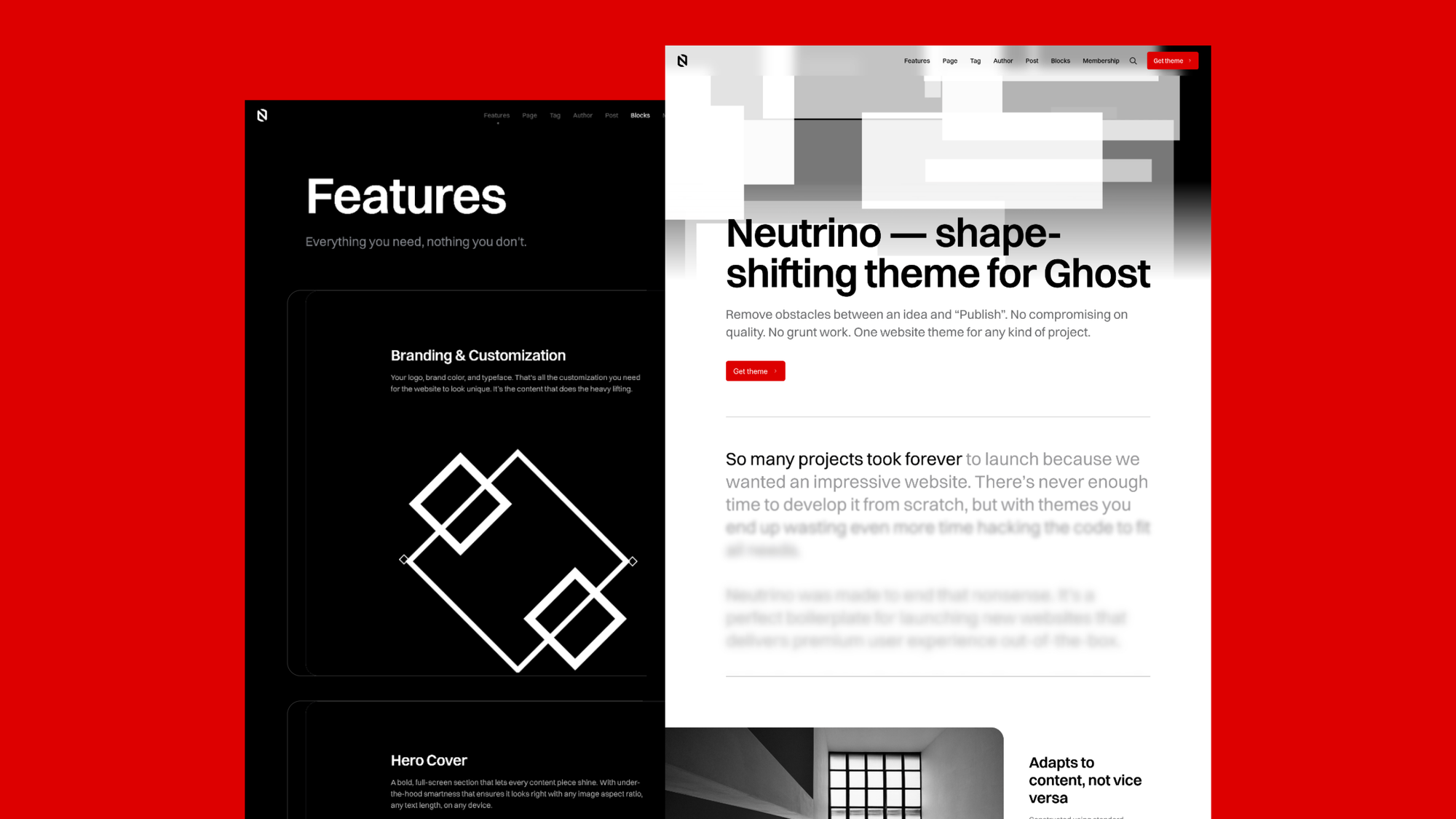
Neutrino Ghost theme
More neutral than beige Switzerland
Visit projectContent vs. Layout Problem
Most themes are designed around ideal content — images at a specified aspect ratio, headlines of median length, and a predictable number of navigation items. Demo sites look polished because the content was crafted to fit.
Real content is messy. Some headlines run long; others are just two words. Phone screenshots are 9:16, and panoramas are 21:9. Some pages need twelve nav links; others need three. When the content doesn't match the template's assumptions, you're left cropping, trimming, and rewriting to make it fit.
Because of this, creating content needlessly becomes a big production effort full of chores that need not be and could be automated. Especially if you're the one running multiple sites.
As a website owner, I want exactly the opposite. A layout engine that assumes variability as the baseline and accommodates extremes. Images frame correctly regardless of aspect ratio. Navigation reflows whether you have three links or thirty. Remove an element, and the layout adjusts without leaving gaps.
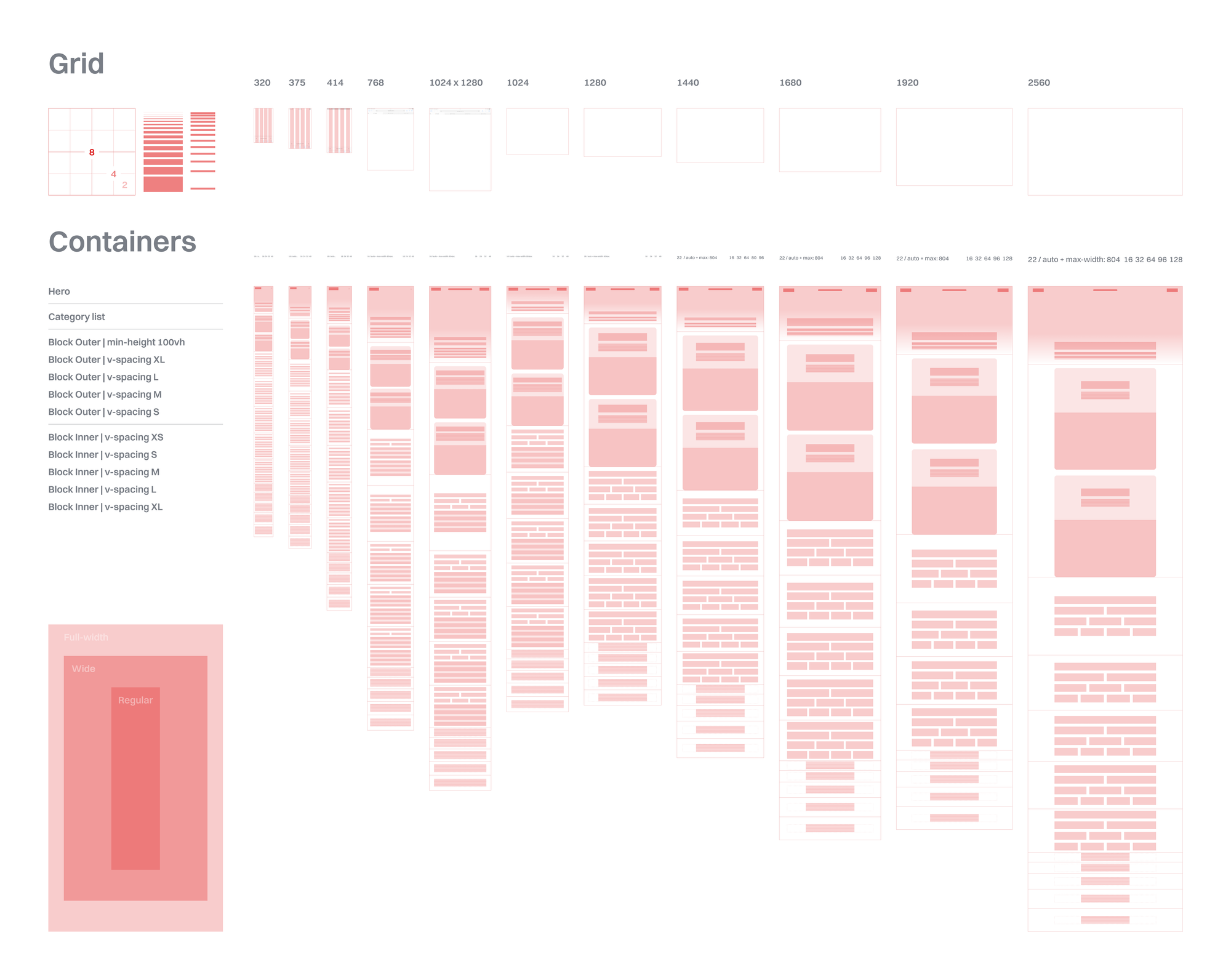
Getting there meant weeks of testing and optimizing design details for twelve breakpoints. The CSS isn't clever — it's tedious. But the result is a gorgeous theme that's virtually unbreakable.
From portfolio to boilerplate
The design started with my portfolio website. Which was extended to the studio website. Both hand-coded proof of concepts.
I wanted the design to be powered by a lightweight CMS. The initial idea was to go fully headless and work with just markdown and media files, but I'm too big of a noob with the terminal to be effective that way. Then I discovered Ghost.
During the development of the theme, I realized the Header block and its Split view option could be used for left-right-left feature presentation landing pages. With a few custom blocks and theme options, the design could also power product, marketing, corporate, and other more complex kinds of websites. So, that’s what I did.
Complex enough to deliver a best-in-class experience for a variety of use cases, but simple enough to go live in a day without needing a user manual to create what you want.